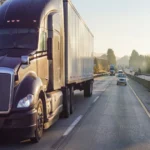
South Bend Truck Accident Lawyers
Key Takeaways:
- Truck accident claims can involve federal safety rules, multiple defendants, and several insurance policies.
- Prompt “preservation requests” help protect electronic records, video, and vehicle evidence.
- Covered interstate freight carriers generally need at least $750,000 in liability coverage.
- Indiana generally allows two years to file a personal injury lawsuit.
- In most private-party negligence claims, fault above 50% prevents recovery.
Our experienced South Bend truck accident lawyers can investigate your crash, identify responsible parties, and pursue compensation for your injuries. Wilson & Kinsman, LLC represents injured people in South Bend and St. Joseph County. Whether your collision involved a semi on the Indiana Toll Road or a delivery truck on a local street, your claim starts with evidence showing what happened and who caused it.
Why Are Truck Accident Claims Different From Car Accident Claims?
Truck cases may involve the driver, trucking company, equipment suppliers, and businesses responsible for loading freight. Federal rules can govern driver qualifications, driving hours, maintenance, and cargo restraint.
Commercial policies may provide higher limits than personal auto policies, but coverage alone does not establish fault. Our South Bend truck accident lawyers must connect unsafe conduct to your injuries.
Where Do Truck Accidents Happen in and Around South Bend?
The most truck accidents around South Bend occur around I-80/90, the Indiana Toll Road; the U.S.-20/U.S.-31 bypass; U.S.-31; and S.R.-933. Our South Bend truck accident lawyers examine the specific roadway and available evidence rather than assuming location proves fault.
Who Can Be Held Liable for a Truck Accident in Indiana?
Depending on the evidence, potential defendants include the following:
- The driver: For negligent driving that causes the collision.
- The carrier: For its driver’s conduct within the employment relationship or its own unsafe practices.
- The manufacturer: When a defective truck or component causes harm.
- The loader: When negligent loading contributes to shifting cargo or a crash.
- The shipper or broker: When its own legally actionable conduct contributes to the injuries.
Which Federal Trucking Rules Can Help Prove Fault?
Your lawyer can compare company records with applicable Federal Motor Carrier Safety Administration (FMCSA) requirements:
- Hours of service and ELDs: Covered property-carrying drivers generally may drive up to 11 hours after 10 consecutive hours off duty, within a 14-hour driving window. Electronic Logging Devices (ELDs) document duty status when required; exceptions apply.
- Driver qualification: Part 391 addresses qualifications, medical fitness, driving-history checks, and qualification files.
- Inspection and maintenance: Part 396 requires systematic inspection, repair, and maintenance of covered vehicles.
- Cargo securement: Federal standards address restraints intended to prevent cargo from shifting or falling.
A violation can support a fault investigation, but your claim must still connect the conduct to the collision and your losses.
What Evidence Must Be Preserved After a Truck Crash?
Ask your legal counsel to promptly send “preservation letters” identifying relevant evidence and requesting that its holders prevent deletion, alteration, or disposal. The request should address the following:
- Available Electronic Control Module (ECM) and ELD data
- Dashcam footage and nearby surveillance video
- Dispatch records, communications, and delivery schedules
- Driver qualification, inspection, maintenance, and loading records
- The truck, trailer, and potentially defective components
A preservation letter puts the recipient on notice, but it does not itself obtain the records. Your lawyer may need inspections, formal discovery, or court assistance. Keep your own photographs, witness information, medical bills, and correspondence.
How Much Insurance Do Trucking Companies Carry?
Under federal financial-responsibility rules, covered for-hire interstate carriers transporting non-hazardous property in vehicles weighing 10,001 pounds or more generally need at least $750,000 in public liability coverage. Certain hazardous-material operations require $1 million or $5 million, depending on the cargo and operation.
These are minimum requirements, not a promised settlement or a universal limit for every truck. A carrier may have additional coverage. Your lawyer should examine applicable primary and excess policies, other defendants’ coverage, and any competing claims arising from the same crash.
What Compensation Is Available After a South Bend Truck Accident?
Depending on your injuries and proof, compensation may include the following:
- Past and future medical expenses, rehabilitation, and necessary care
- Lost wages and reduced future earning capacity
- Physical pain, emotional suffering, and lasting impairment
- Vehicle damage and other documented property losses
Keep records showing both the financial costs and how your injuries affect daily activities.
“Punitive” damages require more than ordinary negligence. When available, Indiana generally caps them at the greater of three times “compensatory” damages or $50,000. The statutory allocation sends 25% of the punitive award to the plaintiff and 75% to the state’s violent crime victims compensation fund.
If a collision causes a “death,” different rules govern eligible claimants and recoverable losses.
How Long Do You Have to File a Truck Accident Claim in Indiana?
Indiana Code § 34-11-2-4 generally gives you two years after a personal injury claim accrues to file suit, usually measured from the crash. Exceptions and separate notice requirements can affect the deadline, however.
Indiana also applies “modified comparative fault” to most private-party negligence claims. Your share of fault reduces your compensation; if you bear more than 50% of the fault, you may forfeit compensation altogether.
Frequently Asked Questions (FAQs):
Should I accept the trucking insurer’s first offer?
Have a lawyer review the offer and release before signing. Compare the proposed payment with your documented losses and anticipated care, including costs that treatment has not yet resolved.
Can I bring a claim if I was partly at fault?
Possibly. In claims governed by Indiana’s Comparative Fault Act, you may recover when your fault does not exceed 50%, with compensation reduced accordingly.
Does every truck need an Electronic Logging Device (ELD)?
No. Federal ELD requirements contain exceptions, including qualifying short-haul operations. Other records may help establish driving hours when an ELD was not required.
What should I bring to my consultation?
Bring the crash report or report number, photographs, insurance correspondence, medical records, and wage-loss information you have. You can still request a consultation if some documents are unavailable.
Been Injured in a Truck Crash? Our Experienced South Bend Truck Accident Lawyers at Wilson & Kinsman, LLC Will Fight to Get You the Compensation You Deserve
If you have suffered injury or loss in a trucking accident in South Bend, our compassionate South Bend truck accident lawyers at Wilson & Kinsman, LLC can review your claim and explain the next steps. Call 574-522-1900, book online now, or submit a form for your free consultation. With office locations in Elkhart and South Bend, Indiana, we proudly serve clients in the surrounding areas.

Testimonials
Read what our former clients have to say: