Key Takeaways:
- The rear driver is often blamed in a rear-end collision, but Indiana law does not make that driver automatically at fault.
- A front driver who brakes hard for no reason, cuts in without room, or drives with broken brake lights can share responsibility.
- Several drivers can share fault in a chain-reaction crash, and each one pays only their own portion of the damages.
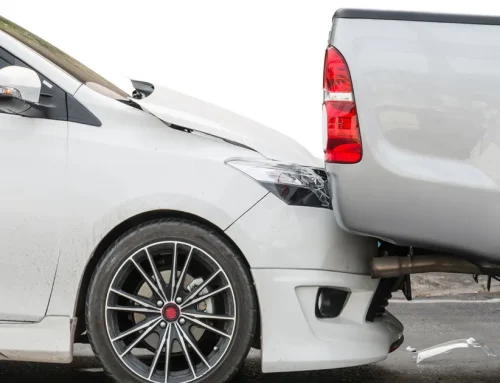
South Bend car accident lawyers usually look first at the rear driver when sorting out fault in a rear-end collision, as Indiana law requires drivers to keep a safe gap. Yet the front driver can share blame for a sudden stop, an unsafe lane change, or broken brake lights. However, fault in a chain-reaction crash that starts with a rear-end collision often falls on several drivers. Police reports, vehicle damage, and witness accounts help show how much responsibility each driver carries.
Is the Rear Driver Always at Fault in Indiana?
No. But insurers often assume otherwise, even though no state law automatically blames the driver who hits from behind. Instead, the question is whether each driver used reasonable care, meaning the caution a sensible driver would show. After a rear-end accident, South Bend Police Department reports record skid marks, damage points, and driver statements; other evidence like traffic camera footage can also serve as evidence.
What Does Indiana Law Say About Following Too Closely?
Under the rule against “following too closely,” Indiana drivers may not trail another vehicle more closely than is reasonable for the speed, traffic, and road conditions. Still, the problem is widespread, as Indiana Criminal Justice Institute (ICJI) data lists following too closely as the primary factor in 30,035 Indiana crashes in 2024.
When Can the Front Driver Be Partly at Fault?
The front driver can be partly at fault for creating a hazard the rear driver could not avoid. Examples include braking hard for no reason, cutting in without room, or driving with broken brake lights. An Indiana rear-end collision lawyer may point to these errors to shift some responsibility away from the rear driver. Under Indiana’s “modified comparative fault” rule, an injured driver’s award can be reduced by their share of fault, and a share above 50% means no award.
Who Is Responsible in a Chain-Reaction Rear-End Crash?
The driver who causes the first impact usually carries the most blame, although others may share it. Picture a Grape Road pileup in Mishawaka that starts with a tailgater and worsens when a distracted driver adds a second hit. Sorting out fault in a chain-reaction rear-end accident means tracing which impact caused which injury. Under Indiana law, each driver pays only their own share of the damages.
Frequently Asked Questions (FAQs):
What evidence helps prove fault in a rear-end crash?
Dashcam footage, business security video, and vehicle data recorders can effectively prove these claims. South Bend car accident lawyers also investigate police reports, gather medical records, and interview witnesses.
How long does someone have to file a rear-end collision lawsuit in Indiana?
Indiana generally allows two years from the crash date to file a personal injury lawsuit. Claims against a government agency require “written notice” in as little as 180 days.
Does a traffic ticket prove the rear driver was at fault?
A ticket can help an injury claim, but it does not settle fault on its own. Civil courts weigh all the evidence separately from the traffic case.
Our Experienced South Bend Car Accident Lawyers at Wilson & Kinsman, LLC Push Back When Insurers Blame the Wrong Driver After a Rear-End Collision
If you were injured in a rear-end collision, contact our South Bend car accident lawyers at Wilson & Kinsman, LLC to learn about your legal options. Call 574-522-1900, book online now, or submit a form for your free consultation. With office locations in Elkhart and South Bend, Indiana, we proudly serve clients in the surrounding areas.
Share This Story, Choose Your Platform!
Related Posts


Testimonials
Read what our former clients have to say: